
Half-accomplishment in politics tends to be more dangerous than accomplishing nothing. If one accomplishes nothing, then failure is clear, and the people still know they require change. However, a half-accomplishment creates an illusion of progress without addressing the core problems. It allows the leaders to declare victory and bring in the people, while the people are put to sleep. It creates frustration, mistrust, and instability in the long run, as expectations increase but delivery is shallow.
History has shown that half-revolution, half-constitution, or half-reform creates more lasting crises than outright stagnation. An imperfect compromise wounds, the institutions are not consolidated, and society gets polarized. Genuine development requires wholeness, not pieces and parts masquerading as success. Yet, Nepal’s political journey consistently displays an inclination of half-accomplishments masquerading as triumphs, while the root structural and societal issues remain unresolved.
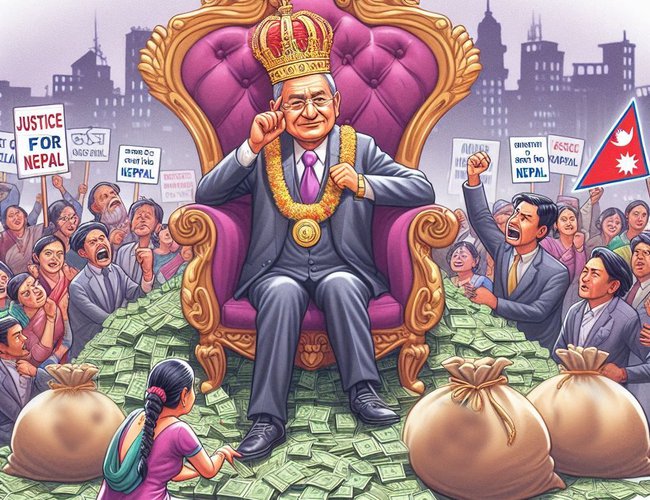
Under the guise of the Gen Z revolution, an articulated plan manipulated idealistic youth. Gen Z did not create the change but was an instrument used by interest groups. The aspirations and energies of an entire generation were diverted to agendas that only served the elite. This is not a temporary blip; this will be remembered in history as a profound betrayal of the people’s trust.
When a nation reaches zero, when institutions collapse, power vacuums emerge, society tears apart, and the economy falters, citizens lose their government, and their sense of shared identity. From this ground zero, we have two paths before us: we can emerge together and start anew with a new system, or fall further into anarchy and potentially become a failed state. This is for the nation to decide.
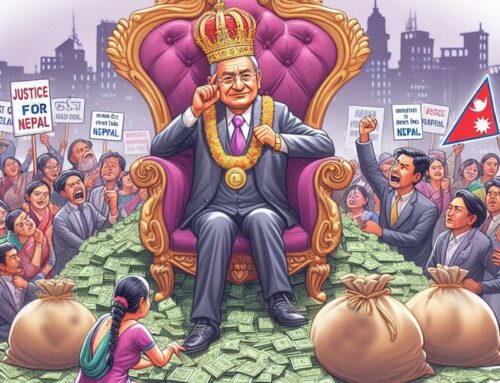
Gazing at Nepal today, we have a constitution, but without substance and authority. It should be a living document, one that guides citizens towards their rights, hope, and destiny. It has instead become an empty shell, a piece of paper on which anyone can play to suit his own agenda. Leaders, opportunist thinkers, and competing groups use it not to empower the people but to consolidate their interests. What we observe, then, is “one constitution,” surrounded by nothing but partisan churn. It yields neither justice, prosperity, nor peace but only protection of privilege and power.
By definition, revolutions through history are meant to provide hope, new orders, and new direction. But in Nepal, competing revolutionary forces emerge almost as soon as revolution has prevailed. The nub question is simple: why was it that the revolutionary force could not be translated into enduring change? The answer lies within the constitution itself. It is perceived by many as merely a document of compromise, a means of sharing power to benefit a select few. People’s voices are put on paper, but real state mechanisms remain in the grip of the elite. More from inducing change, the revolution mutated into a counter-revolution.
That Nepalese revolutions produce counter-revolutions just a year after tensions highlights the failure of the constitution to instill hope. Tissue-paper-made structures don’t translate into justice, equality, or national harmony. They perpetuate inequality, discrimination, opportunism, and hunger for power. Without revolutionary change, this cycle is sure to continue.
Deep change cannot be external. If a person destroys an old, dilapidated edifice and restructures on the same weak foundation, the structure can be handsome but will remain unstable. Similarly, social and political changes built upon defective, old ways with new faces cannot succeed. Old ways and structural defects must be entirely replaced with robust, new foundations to ensure stability, onward progress, and real transformation.
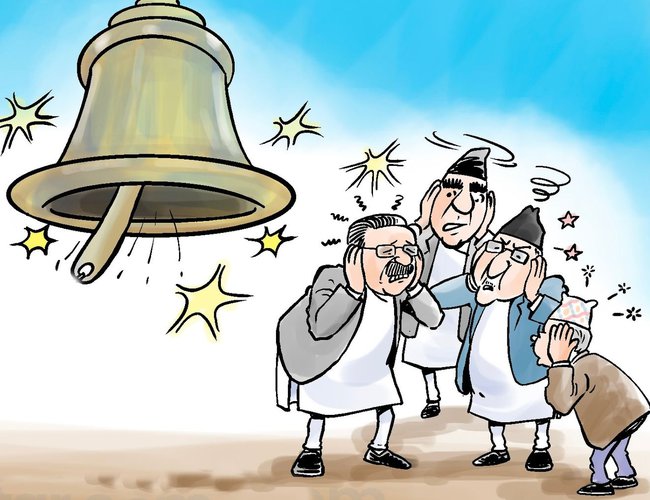
Nepal’s previous revolutions mostly failed to deliver the social and political transformation that the people yearned for. Compromising with the status quo diluted the very spirit of revolution. Gen Z is as energetic and ambitious, but they are not a political party; they are a pressure group. Their struggle could be co-opted or diluted, repeating what the previous movements have achieved.
Self-introspection is the order of the day. The constitution must metamorphose itself from a written piece of paper into a living embodiment of the faith and hopes of the people. Failing which, Nepal will remain mired in the cycle of revolution and counter-revolution generation after generation. The change sought by Gen Z will necessarily run against the prevailing constitutional mechanism a reality acknowledged even by such revered figures like former Prime Minister Sushila Karki.
President Ramchandra Paudel was faced with a dilemma: retain the current constitution and try to solve things within Parliament, which would guarantee stability but not satisfy Gen Z’s short-term expectations of executive power; or discard the constitution entirely to draft a new one, a risky procedure replete with potential instability. Attempting a middle course, he could neither fully support the constitution nor provide what Gen Z demanded, demonstrating the tension between providing legal stability and bowing to revolutionary pressure.
Half-won politics hides stagnation beneath the guise of progress. Nepal’s new constitution, with all praise as a compromise, has benefited elites rather than citizens’ ideals. It has institutionalized division and opportunism and has not delivered justice, equality, or national unity. The Gen Z movement, with so much promise, was hijacked and is most likely going to wither into the same pattern as other movements. True change involves remaking political and social foundations, not just replacing facades. Until Nepal gets down to it, it will be stuck in a never-ending cycle of revolution and counter-revolution, hope and betrayal.



Leave A Comment